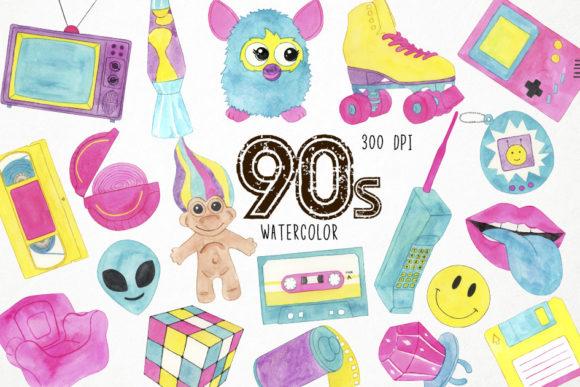
Watercolor 90s Clipart, Retro Illustrations
As a graphic designer with years of experience working on branding, packaging, and digital marketing visuals, I’ve come across countless design assets. But when it comes to retro aesthetics, Watercolor 90s Clipart, Retro Clipart stands out as a versatile and nostalgic resource for real client projects. This collection of illustrations offers a unique blend of hand-drawn charm and modern usability that can elevate a variety of creative endeavors.
The First Impression: A Nostalgic Visual Language
Upon first glance, Watercolor 90s Clipart, Retro Clipart exudes a warm, handcrafted energy. The soft watercolor textures, gentle gradients, and slightly irregular edges evoke a sense of authenticity that feels reminiscent of vintage art. These elements create a visual mood that’s both playful and sophisticated, making it ideal for brands aiming to connect with audiences through nostalgia or a handmade aesthetic.
This style naturally fits projects targeting indie businesses, boutique product lines, or seasonal campaigns. It works well for small business branding, Etsy shops, or print-on-demand sellers looking to add a personal touch to their digital products. The illustrations feel like they were drawn by an artist rather than generated by a machine, which adds a layer of emotional appeal that can resonate with customers.
Real-World Applications: From Packaging to Social Media Graphics
In practice, Watercolor 90s Clipart, Retro Clipart proves its worth across multiple design disciplines. For logo design, these illustrations can serve as a focal point or subtle background element, adding character without overwhelming the message. In brand identity work, they help establish a cohesive visual language that feels approachable and memorable.
When used in packaging design, these illustrations bring a tactile, artistic quality that stands out on shelves. They also work well for product labels, stickers, and merchandise like t-shirts, mugs, and tote bags. For social media graphics, the retro vibe pairs beautifully with modern typography, creating eye-catching posts for Instagram, Pinterest, or Canva templates.
These illustrations are especially effective in editorial design, where they can act as decorative accents or standalone visuals. They also shine in printable designs, such as wall art, greeting cards, or DIY projects. Whether you're designing for a handmade business or a local event, this asset provides a consistent and recognizable visual theme.
Where It Shines: Large Layouts, Themed Collections, and Commercial Use
Watercolor 90s Clipart, Retro Clipart excels in large layout areas, hero graphics, and product mockups. Its organic shapes and fluid lines make it perfect for creating a visual hierarchy that guides the viewer’s eye without being too rigid. In themed collections—such as seasonal campaigns or holiday promotions—these illustrations can unify a set of designs under a shared aesthetic.
For commercial design, this clipart is a solid choice when the goal is to evoke warmth, creativity, or a sense of history. It works well in sublimation design, sticker design, and even Cricut projects where the final product needs a handcrafted look. As a digital product, it supports print-on-demand sellers looking to add unique visuals to their offerings.
Where to Use With Caution: Minimalist Branding and High-Contrast Designs
While Watercolor 90s Clipart, Retro Clipart has many strengths, it may not be the best fit for every project. In minimalist branding, where clarity and simplicity are key, these illustrations could clash with clean, modern fonts or minimal layouts. Similarly, in high-contrast or low-contrast designs, the soft edges and muted tones might not stand out as effectively.
For professional corporate materials, the casual nature of these illustrations could undermine the desired level of formality. If a client requires a very strict visual hierarchy or a highly polished look, this asset may need to be paired carefully with other design elements. It’s important to test how it interacts with different backgrounds, text sizes, and color schemes before finalizing a design.
Design Considerations: Testing and Practical Tips
Before using Watercolor 90s Clipart, Retro Clipart in a client project, there are several practical steps to take. First, test it in black and white to see how the contrast holds up. Preview it on both light and dark backgrounds to ensure visibility. Check how it looks at small and large sizes, as some details may become lost when scaled down.
Place it on real mockups—whether for packaging, social media, or website graphics—to get a sense of how it will appear in context. Review file formats, especially if you need SVG design or PNG design for different applications. If transparency is involved, inspect the PNGs to ensure clean edges. Compare the illustrations with various font styles, from serif to display fonts, to find the best pairing.
Lastly, always confirm the commercial license before using the asset for a client or business project. This ensures that your design work remains legally sound and avoids any unexpected issues down the line.
Final Thoughts: A Valuable Addition to Any Designer’s Toolkit
Watercolor 90s Clipart, Retro Clipart is more than just a collection of illustrations—it’s a creative tool that can enhance a wide range of design projects. Whether you’re working on a handmade business branding, a seasonal campaign, or a digital ad, this asset brings a unique visual language that can elevate the overall impression of your work.
For designers, marketers, and small business owners, it’s a reliable choice that balances nostalgia with functionality. When used thoughtfully, it can improve readability, emotional appeal, and audience engagement, making it a valuable addition to any design bundle or creative marketplace offering.
Ultimately, Watercolor 90s Clipart, Retro Clipart is a testament to the power of thoughtful illustration in modern design. It reminds us that sometimes, the most effective visuals are those that feel authentic, expressive, and deeply rooted in the past.